Story

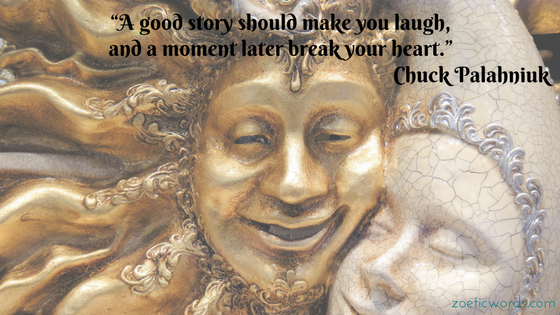
Story make you laugh

This is so true. If your story doesn’t move you, you cannot expect it to move your reader. Keep your reader in mind and what reaction you want to provoke.

Write and rewrite and edit until your words crush the heart in your own chest, tears stream down your cheeks, you can’t stop laughing, until you can’t believe you wrote that. Blow yourself out of the water.

Stories are light

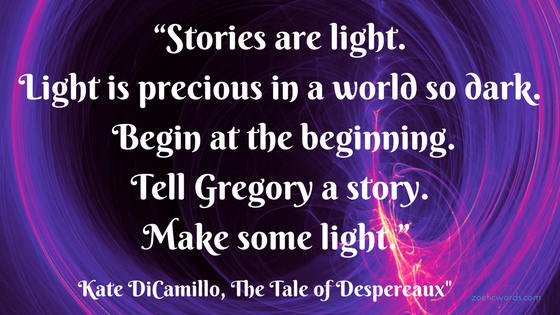
Stories are light

Write some light into the world. Your reader wants something to look to, guidance through the murky darkness. Help them escape the melancholy gloom, set a cheerful fire to warm their hands by.

Light a flame in their hearts warm enough to carry them back safe into reality. Light the way to a better future.

Words that mean something

Good strong words

Few deliberately read or write the wishy-washy. Though there are many reasons we read and write, few involve wasting time when there is much to learn and experience which will enrich and improve your life.

Something I find myself repeating often in my editing is, “what do you mean by this?” Some words have many meanings, combining certain words can cause confusion. It is not easy to say exactly what you mean and mean exactly what you say. Specificity is important when conveying meaning.

Take for example “he jumped in his little red car and drove off down the road”. Without specificity, our character might be anyone who drives a red car, from Enid Blyton’s Noddy to James Bond. The car might be a red Ferrari or a child’s toy racing car. He may drive like the chauffeur of a VIP or a professional driver on a Grand Prix circuit.

Especially when word count is limited, each word must work hard to earn its place. Try interpreting the above example in as many specific ways as you can. I’ll start.

“The learner barely cleared the door of his new scarlet MG before hitting the starter, kangaroo hopping, stalling, restarting before putting it in first gear and, attempting nonchalance started off again, his face a similar colour to his paint job.”

“Angry at the insult, he stormed off, slammed the door of his Rally Red Corvette, revved the engine before roaring off in a squeal of tyres on bitumen.”

“Carefully closing the door of his fully restored Salsa Red VW Beetle, he fastened his seatbelt, started the motor, checked there was no traffic coming, indicated and pulled away from the curb smoothly, giving a cheerful beep beep goodbye.”

I’d love to hear your interpretation.

Words

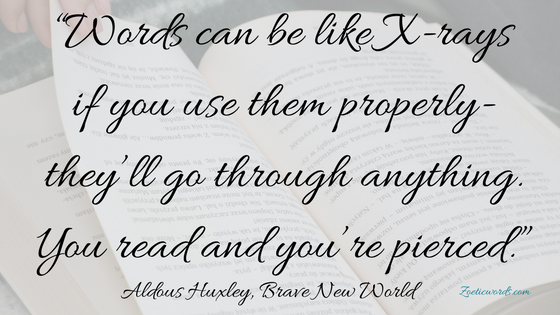
Words like x-rays

How can you write ‘words like X-rays’? Readers like to live the emotion of the story. How do you show the emotion so the reader is pierced? Feel the emotion yourself and it will shine through in your writing.

Keep some kind of conflict in each scene, Put yourself in the part of the character, act out the part, sink deep into the role and draw that emotion onto the page and show, don’t tell. How you ask? It’s easy to tell. Just tell it like it is.

I was angry. Furious. How dare she call my beautiful little girl a fat pig? She’s a gorgeous six-year-old without body image problems. Did the woman, who does have an eating disorder herself, not care about the damage she might cause?

Yes, as a reader you may be enraged by the situation. However, did you feel the rage in your body? How might that feel? What do you think about something like this:

My hand fisted at my side, ready to punch the mouth that said such a cruel thing to my beautiful daughter. A red tide of rage rose across my chest, up my throat across my cheeks and wavered before my eyes. I ground my teeth in an effort to hold my tongue, to stop myself giving her a piece of my mind before I took time to think through my response.

‘May I please speak with you privately?’ The softest voice I could muster shook as I restrained myself from adding a curse word or five in front of the children.